Posts

Showing posts with the label yoga toes

The Primary Series : Sitting Postures
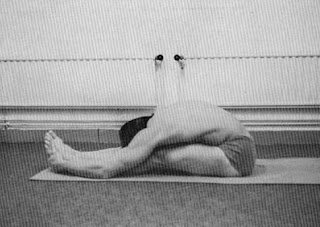
Image
XIV PA SCHIMOTTANASANA A-C • INTENSE WEST STRETCH OR SITTING FORWARD BEND Paschima=west Uttana=intense stretch A 1. Inhale, arms up, look up to thumbs. 2. Exhale, bend forward, hold onto big toes with middle and index fingers. 3. Inhale, head up, straighten spine, lift chest and look toward 3rd eye. 4. Exhale, bend forward, pulling elbows out to sides to help bring chest to thighs, then nose to knees. (In A, B, and C pull shoulder blades back down the spine as the arms stretch forward to create oppositional pull.) Drishti: nose. Hold for 5-8 breaths. Modified posture: hands to ankles or shins, look up, spine straight. B 1. Inhale, head up, look up between eyebrows, lengthen spine, this time hold around sides of feet. 2. Exhale, bend forward, go a little deeper into the posture and bring chin to knees, elbows should be above the ground out to the side, not touching the floor, feet flexed. Drishti: nose. Hold for 5-8 breaths.. C 1. Inhale, head up, ...

The Primary Series : Sitting Postures

Image
XIII DANDASANA • STAFF POSE Danda=staff, rod 1. Sit with legs extended out in front and hands on floor by hips with fingers facing the feet, sitting up with spine straight. Place chin to chest in jalandhara bandha, shoulders rolled open and scapula pulled down the back. Drishti: nose. Hold for 5-8 breaths.

The Primary Series : Standing Asanas

Image
XI Utkatasana – Fierce pose Utka=fierce or powerful 1. Inhale, hands up, look up to thumbs. 2. Exhale, forward bend, gaze nose. 3. Inhale, head up, gaze 3rd eye. 4. Exhale, bend knees, jump back to Chaturanga. 5. Inhale to upward dog, lift chest. 6. Exhale back to downward dog. 7. Inhale, head up, bend knees and jump to top of mat, feet together. Straighten or lift upper body to erect position with knees bent, palms together but not clasped, arms as straight as possible pointed to ceiling. Deepen posture with each breath. Drishti: thumbs Hold for 5-8 breaths. With last inhale deepen 1/2 way down towards floor. 8. Exhale, come up and bend forward in a swan dive, arms to sides. Look toward 3rd eye and then tip of nose. 9. Inhale, head up, look between eyebrows. 10. Exhale, bend knees and jump back to Chaturanga. 11. Inhale, upward dog. 12. Exhale, downward dog.

The Primary Series :: Standing Asanas

Image
IX UTTHITA HASTA PADANGUSTHASANA • HAND TO BIG TOE POSTURE Utthita=extended Hasta=hand Pada=foot Padangustha=big toe 1. Inhale, right leg up, hold big toe with first two fingers of right hand, left hand on hip, right leg straight. 2. Exhale, chin towards knee. Drishti: big toe. Hold for 5-8 breaths. Modified posture: hold knee into chest. 3. Inhale, look up, straighten body, keeping leg extended out. 4. Exhale, right leg out to right side, look to left. Drishti: far to side. Hold posture 5-8 breaths. 5. Inhale, leg back to center. 6. Exhale, take foot with both hands, pull leg toward chest (bending elbow), chin toward knee or shin. 7. Inhale, head up. 8. Exhale, hands to hips, hold leg extended straight out in front for 3 breaths. With last exhale bring leg down to Samastithi. Repeat other side. Modified posture: keep knee bent as you bring leg out to side and back in to chest.

Yoga Emotional and Physical Benefits

Image
Not only does the practice of yoga have wonderful physical benefits, there are also more subtle benefits regarding the emotional and spiritual dimensions. Yoga-based relaxation techniques and stretching are effective because the mind is focused in a meditative way on the movements, skin / muscle sensations and relaxed breathing. A healthy body contributes to a healthy mind. Furthermore, a relaxed body contributes to relaxing the mind and emotions. This combination results in complete, dynamic health. Yoga provides powerful skills for stress-management - coping with the stresses or ups and downs of daily life. Accumulated emotional stress can manifest as character armor in the body, which may lead to maladaptive psychological tendencies including anxiety, depression and addictions. In Yoga this armor is called "kleshas". The postures bend, stretch and twist these "kleshas" out of the system, thus releasing emotional blockages. As the body becomes more flexible s...

How Can Yoga Change Your Life?

Image
Yoga is one of the best natural "risk-free" solutions against stress. It can be practiced by anyone, anywhere in the world. Many people do yoga on a daily basis, to keep fit and avoid any trouble can be caused by depression or anxiety. They don't just practice yoga for its healthy benefits, but they consider it as the effective way to concentrate, and focus to achieve their goals. Yoga opens the doors for a new, exotic universe, in front of its serious yogi and yogini. These later refers to the man and woman who practice yoga for their well-being. They live in peace of mind, and feel the beauty inside and around them. They are proud of their achievement! Let's talk about the major mental and physical benefits of yoga. In addition to its stress relieve effect, yoga has many other wonderful benefits: When you start your yoga exercise, you clean your mind from any destruction. You gain self-confidence, and the power of mental visualization. You beat all your fears and f...

The Primary Series : Standing Asanas 5 & 6

Image
V UTTHITA PARSVAKONASANA • EXTENDED SIDE ANGLE POSE Utthita=extended Parsva=side Kona=angle 1. Inhale, jump to right, approximately 4 ft apart, arms out to the sides, left heel turned in, right foot parallel to edge of mat. 2. Exhale, bend right knee over right ankle, extend right arm out as far as possible before placing it on floor outside of the right foot, either palm or finger tips, keep the pelvis tucked, open chest toward ceiling, press right knee into right arm and push on floor with back foot, feeling of being drawn and quartered. Drishti: palm of left hand. Hold for 5-8 breaths. 3. Inhale, come up. 4. Exhale down to other side, repeat 1-3. Modified posture: right elbow on right knee instead of hand to floor, back knee on the floor if necessary. VI PARIVRITTA PARSVAKONASANA • REVOLVING SIDE ANGLE POSE Parivrita=revolved Parsva=side Kona=angle 1. Exhale, turn to right bending right knee directly over right ankle. Bring left elbow on the outsi...

The primary series

There are 6 series or sequences of postures in the ashtanga yoga system. This manual focuses on the primary, or first series, which is known as yoga chikitsa (yoga therapy). It is designed to heal, detoxify, and align the body and mind, particularly the spine. The sequencing of postures is a science, set up so that each asana provides a necessary foundation for what follows. We always begin with the sun salutations and standing postures to generate heat and connect with the breath. The first half of the primary series (which begins after the standing postures) is mostly forward bends, working the hamstrings, hips, and back. The middle section focuses on flexibility and the third part combines more flexibility with strength postures. The finishing postures are the same regardless of what series you are practicing. They are restorative postures designed for cooling down, balancing out the body, and integrating the effects of the practice. This is the vinyasa system, a breathing/movin...

Surya Namaskara

Image
Practice Surya namaskara B Begin in Samasthiti, equal standing 1. Inhale, bend knees, lift arms, palms together over head, gaze at thumbs. 2. Exhale, straighten legs to a forward bend, Uttanasana, gaze at nose. 3. Inhale, head up, lengthen spine, gaze at third eye. 4. Exhale, jump back to Chaturanga Dandasana. 5. Inhale, lift chest, head back to Urdhva Mukha Svanasana, upward facing dog, gaze at sky. 6. Exhale, lift hips to downward facing dog, Adho Mukha Svanasana, gaze toward navel. 7. Inhale, right foot forward, left heel turned inward. Virabhadrasana, lift arms, palms together. Right knee bent, left leg straight with back foot pressed into floor. Gaze at thumbs. 8. Exhale, back to Chaturanga Dandasana. 9. Inhale, upward facing dog, Urdhva Mukha Svanasana 10. Exhale back to downward dog. 11. Inhale, left foot forward, right foot turned in at an angle, Virabhadrasana; lift arms above head, gaze to thumbs, left knee bent. 12. Exhale back to Chaturanga....

Pranayama : The Serpent Power

Image
Pranayama : The Serpent Power Live As You Breathe; Take In and Let Go Swami Rama used to say a person has one thought on inhalation and another on exhalation, so that the rate of breath determines the number of thoughts a person has. Greater number of thoughts (a faster breathing rate) decreases concentration because there are so many thoughts going on. The breath, body and mind are so closely linked, a change in one brings about a change in the other two. By developing control of your breath in certain ways, you can bring beneficial changes to your body and mind. Pranayama acts as a key, it opens the mind, freeing the nervous system of its ordinary patterns and habits. By breathing from the upper third of the respiratory system, pranayama can move blocked pathways to the brain and the nervous system, creating new patterns, roadways to the superhighway of the superconscious. Pranayama revitalizes the body, steadies the emotions, and creates great clarity of mind. ...

The invocation

Image
Acknowledge The Creator You say a prayer. Connecting with the world of sound, you focus your attention inward. Om… (All; the universal vibration) I bow to the lotus (symbol of unfolding enlightenment) feet of the teachers Who awaken in me the pure happiness of universal being. I take refuge in the jungle physician, Who dispels the delusions of conditioned existence to reveal peace. I prostate my ego self before the wisdom of Patanjali Who is depicted as crowned by a thousand white radiant serpents (the symbol of kundalini, universal energy) And as holding in his hands a conch shell (the symbol of divine sound, AUM, and the planet’s breath in the ocean waves) As holding a discus of light (the symbol of infinite time, and the one sun which shines on all with equanimity) And as holding the sword of discrimination between illusions (of the selective attention of ego conditioned particularities) and universal t ruth. Om…

Ashtanga Yoga : Jalandhara bandha

Jalandhara bandha Jalandhara bandha is the water pipe lock. It binds the network of subtle energy channels. Engaging Jalandhara bandha is useful for alleviating diseases of the throat. It also mproves the quantum of prana in the thoracic region. By pressing the chin to the chest, prana is captured, preventing it from escaping the upper body. Many major nerve fibers pass through the neck; when jalandhara bandha is performed it exerts pressure on them and the flow of nervous impulses to the brain is restricted. These impulses collect in the cervical plexus, and when the bandha is released they flood into the brain. The force of these impulses helps to activate higher centers in the brain, those that function with creativity and intellect. Practice Jalandhara bandha 1. Sit comfortably in siddhasana or padmasana (illustration p.13). Place the palms of the hands on the knees and allow the whole body to relax. Inhale slowly and deeply through the nose and retain the breath. Lower the chin so...

Ashtanga Yoga: Capturing Prana II

Image
Contemplating your navel The solar plexus is located just back of the pit of the stomach on either side of the spinal column. The name “solar” is well bestowed upon this major nerve plexus, as it radiates energy to all parts of the body. According to the yogic texts it is the great storehouse of prana, the manipura chakra. Other Eastern cultures link it to the hara, dan tien, center of chi or ki. It’s the center of our being from the umbilical cord to adulthood. It‘s the place where you get that gut feeling, the intuitive sense. We’ve got to keep it healthy, tuned in and alive. Uddiyana Bandha • The Flying Bandha Practice Uddiyana bandha 1. Stand with feet about two feet apart. Bend the knees slightly and rest the hands above the knees, with the thumbs facing inwards and the fingers outwards. The spine must emain straight, not curved; the head should be kept up and eyes open. Inhale deeply through the nose, then exhale quickly through slightly pursed lips, bu...

ashtanga yoga demo

Ashtanga Yoga Demo

Jala Neti • Nasal Cleansing

Image
Jala Neti • Nasal Cleansing Most colds and viruses are breathed in through the nose. From there they work their way through our system to the throat, chest, and into the entire respiratory system. One of the most effective ways of stopping that cycle is to clean out the nasal passages. A neti pot and some lightly salted water can do the job quite thoroughly. Nasal cleansing exerts a profound physiological effect on the body and mind. On the physical level, irrigation of the nasal mucosaremoves accumulated mucus from the nostrils, associated passages and sinuses, allowing air to flow without obstruction. Regular practice of neti maintains healthy secretory drainage mechanisms of the entire ear, nose and throat area. This helps to ward off colds and coughs, hay fever, and tonsillitis. It builds up resistance to various diseases of the ears, eyes, and throat. Practicing neti promotes a balance between the right and left nostrils and consequently the right and left hemispheres of the bra...

Cleansing and Purification:: Meltdown

Image
Nauli kriyas If you look around you, you’ll notice what happens as we get older. The middle of the body begins to lose shape and collapse. Gravity is pulling us downward. Unless we are practicing some type of opposing technique, the whole solar plexus area, a major nerve center of the body, will become squashed. Not to mention the toxins that get trapped, the poor digestion that results, and thelack of oxygen to the abdominal region. Naulis, in conjunction with the bandhas, bring everything upward, inviting vitality back into the middle of the body. These techniques keep the gastro-intestinal or alimentary system balanced and functioning smoothly. Naulis massage the internal organs, acting as an internal cleansing technique. Keeping you pure and clean, naulis remove sluggishness of the stomach, intestines, and liver, bringing back upward the evercaving-in abdominal region which is crushing and suffocating internal organs as gravity pulls us down.Don’t let the fire go out. Keep the chan...

Asanas

Image
Asana is not a particular posture, but a state. Within the word asana itself are the connotations of strength and firmness, as well as the connotations of pleasantness and comfort. This is the balance we are trying to achieve, strength and flexibility, not only in the physical postures, but also in our mental state. Take The Ambition Out Of It Everybody is unique and their progression in yoga is going to look differently than the person next to them. It is important to allow the asanas to arise out of an internal place rather than some externally imposed idea of what the posture should look like. As long as you are working at your peak, combining breath, bandhas, and movement, and you are gaining that internal sense of stretching and strengthening, you are exactly where you needto be. In the beginning, the physical aspects of the postures will affect you the most. In time, and as you progress, you will become more aware of the flow of prana, life force, moving through your ...

Prana

Image
The Chakras From bottom to top the 7 chakras: 1. Muladhara chakra - at the anus 2. Svadhishthana chakra - at the genitals 3. Manipura chakra - at the navel 4. Anahata chakra - at the heart 5. Vishuddha chakra - at the throat 6. Ajna chakra- between and behind the eyebrows 7. Sahasrara chakra - at the crown of the head Prana is a subtle form of energy. Prana literally means “breathing forth” the universal life force. Through practicing asana and pranayama, prana is brought into and stored in the body, increasing vitality. Prana mainly flows through the body in the nadis, or nerve channels of the astral body. Prana exists as a negative energy as well as a positive energy. Prana moves upward and apana moves downward. When the two unite at the muladara chakra (base of spine) kundalini (dormant cosmic energy) is awakened. The most important nadi, or energy channel, (there are 72,000!) is the shushumna nadi which correlates to the spinal cord in the physical body. When kundalini is awakened ...

The History of Ashtanga Yoga

Image
Twenty years ago Ashtanga yoga was very much a fringe activity. Our small, dedicated group of students in Encinitas, California were mostly young, hippie typeswith little money and few material possessions. We did have one precious thing – Ashtanga practice, which we all knew was very powerful and deeply transformative. Practicing together created a unique and magical bond, a real sense of family. Over the years the Ashtanga family has grown considerably throughout the world and I’ve had the opportunity to share the practice with many wonderful people as both a student and teacher. In Austin, Texas I met Larry Schultz 15 years ago when he was just beginning his Ashtanga practice with my teacher, Pattabhi Jois. Even though the practice was very challenging for him, Larry approached it with great enthusiasm, optimism, and gratitude. He, like so many others, recognized immediately that this was exactly what he had been looking for and was very excited by both the practice and the people i...

Practising Ashtanga Yoga

Image
Yoga is a philosophy of the life, which has also the eventual to create a healthy body and vibrantly spirit. The yoga of Ashtanga vinyasa is a method of the yoga which has it's origins in a known ancient document under the name of korunta yoga. Ashtanga refer specifically to eight the practical spiritual ones described by wise Patanjali in Sutra yoga. It is advisable to note that the experts of the majority of the modern externats of yoga of hatha, including pattabi jois, draw from yoga sutras de patanjali and thus practise the yoga of ashtanga. Means of yoga of Ashtanga exactly "eight-limbed yoga," as described by wise patanjali in sutras yoga. The yoga of Ashtanga aims at purifying the body by the eight members or stages of yoga. It starts outside with yama which is the order and niyana which is the codes of conduct. They are manners that we trade and with what we can act one on the other with whole reality and ourselves at the same time. These stages cannot be practise...