Posts

Showing posts with the label yoga exercises

The Primary Series : Sitting Postures
Image
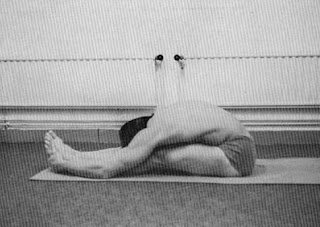
XIV PA SCHIMOTTANASANA A-C • INTENSE WEST STRETCH OR SITTING FORWARD BEND Paschima=west Uttana=intense stretch A 1. Inhale, arms up, look up to thumbs. 2. Exhale, bend forward, hold onto big toes with middle and index fingers. 3. Inhale, head up, straighten spine, lift chest and look toward 3rd eye. 4. Exhale, bend forward, pulling elbows out to sides to help bring chest to thighs, then nose to knees. (In A, B, and C pull shoulder blades back down the spine as the arms stretch forward to create oppositional pull.) Drishti: nose. Hold for 5-8 breaths. Modified posture: hands to ankles or shins, look up, spine straight. B 1. Inhale, head up, look up between eyebrows, lengthen spine, this time hold around sides of feet. 2. Exhale, bend forward, go a little deeper into the posture and bring chin to knees, elbows should be above the ground out to the side, not touching the floor, feet flexed. Drishti: nose. Hold for 5-8 breaths.. C 1. Inhale, head up, ...

The Primary Series : Sitting Postures

Image
XIII DANDASANA • STAFF POSE Danda=staff, rod 1. Sit with legs extended out in front and hands on floor by hips with fingers facing the feet, sitting up with spine straight. Place chin to chest in jalandhara bandha, shoulders rolled open and scapula pulled down the back. Drishti: nose. Hold for 5-8 breaths.

The Primary Series : Standing Asanas

Image
XII VIRABHADRASANA A-B • WARRIOR Vira=hero A From downward dog, Adho Mukha Svanasana 1. Inhale, step right foot forward between hands, bend right knee to 90 degrees, square the hips, press back heel and outside of foot into floor, as you lift arms up over head, palms together, gaze upward and really emphasize mula bandha. Drishti: thumbs. Hold for 5-8 breaths. 2. Inhale, straighten right leg, come up and turn around to other side, bend left knee, arms up over head. Virabhdrasana A, left side 5-8 breaths. B 9. Inhale, keep the trunk straight, a feeling of being pulled from four directions, revolve hips open to right, arms out to sides looking over middle finger of left hand. Bend left knee, tuck pelvis, lift chest. Press back heel and outside of back foot into floor. Drishti: tip of middle finger. Hold for 5-8 breaths. 10. Inhale, come up, straighten legs, revolve around to other side, bend right knee over right ankle, Virabhadrasana B, right sid...

The Primary Series : Standing Asanas

Image
XI Utkatasana – Fierce pose Utka=fierce or powerful 1. Inhale, hands up, look up to thumbs. 2. Exhale, forward bend, gaze nose. 3. Inhale, head up, gaze 3rd eye. 4. Exhale, bend knees, jump back to Chaturanga. 5. Inhale to upward dog, lift chest. 6. Exhale back to downward dog. 7. Inhale, head up, bend knees and jump to top of mat, feet together. Straighten or lift upper body to erect position with knees bent, palms together but not clasped, arms as straight as possible pointed to ceiling. Deepen posture with each breath. Drishti: thumbs Hold for 5-8 breaths. With last inhale deepen 1/2 way down towards floor. 8. Exhale, come up and bend forward in a swan dive, arms to sides. Look toward 3rd eye and then tip of nose. 9. Inhale, head up, look between eyebrows. 10. Exhale, bend knees and jump back to Chaturanga. 11. Inhale, upward dog. 12. Exhale, downward dog.

The Primary Series :: Standing Asanas

Image
X ARDHA BADDHA PADMOTTANASANA • HALF BOUND LOTUS FORWARD BEND Ardha=half Baddha=bound Padma=lotus Uttana=intense stretch 1. Inhale, place the right heel as close to the navel as possible. 2. Exhale, reach around behind back with right hand and hold onto big toe of right foot. 3. Inhale, lift left arm up. 4. Exhale, bend forward, looking straight ahead, left hand on floor. Drishti: nose. Hold for 5-8 breaths. 5. Inha le, head up, look between eyebrows. 6. Ex hale, fold forward, crown of head towards floor. 7. Inhale, head up, look up. 8. Exhale, spine straight. 9. Inhale, come up. 10. Exhale , leg down to Samastithi. Repeat left side,1-10. Modified posture: hold foot up in half lotus with both hands, 5-8 breaths, don ’ t bend forward. Or bend forward with both hands to the floor, and knee bent .

The Primary Series :: Standing Asanas

Image
IX UTTHITA HASTA PADANGUSTHASANA • HAND TO BIG TOE POSTURE Utthita=extended Hasta=hand Pada=foot Padangustha=big toe 1. Inhale, right leg up, hold big toe with first two fingers of right hand, left hand on hip, right leg straight. 2. Exhale, chin towards knee. Drishti: big toe. Hold for 5-8 breaths. Modified posture: hold knee into chest. 3. Inhale, look up, straighten body, keeping leg extended out. 4. Exhale, right leg out to right side, look to left. Drishti: far to side. Hold posture 5-8 breaths. 5. Inhale, leg back to center. 6. Exhale, take foot with both hands, pull leg toward chest (bending elbow), chin toward knee or shin. 7. Inhale, head up. 8. Exhale, hands to hips, hold leg extended straight out in front for 3 breaths. With last exhale bring leg down to Samastithi. Repeat other side. Modified posture: keep knee bent as you bring leg out to side and back in to chest.

The Primary Series :: Standing Asanas

Image
VIII PARSVOTTANASANA • INTENSE SIDE STRETCH POSTURE Parsva=side Uttana=intense stretch 1. Inhale, jump feet out 3 ft apart, right foot parallel to edge of mat (90 degrees) left heel turned in (left foot at a 45-60 degree angle). 2. Exhale, hands in prayer behind back, turn hips to right, lift kneecaps. 3. Inhale, look up, open chest. 4. Exhale, press palms together not clasping thumbs or fingers, stretch out and then down, bend from the hips forward over right leg, bring chin toward shin. Pull right hip back so hips are parallel, lift elbows. Drishti : 2nd toe of extended foot. Hold for 5-8 breaths. 5. Inhale, come up. 6. Exhale , turn hips to left, reverse feet. 7. Inhale, open chest, look up and back. 8. Exhale, bend forward over left leg. Hold 5-8 breaths. 9. Inhale, come up. 10. Exhale, hop to Samasthiti. Modified posture: hold elbows behind back instead of hands in prayer, stay at half way down position with head up, spine straight.

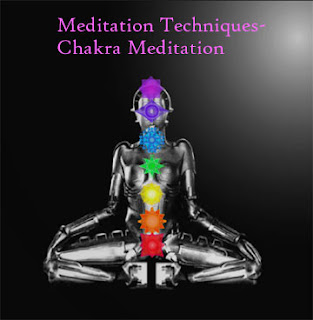
Chakra Meditation

Image
T he human body has some sensitive areas known as the centers or the charkas that are responsible for emotions, intuition. They are located in seven important parts of our body. Chakra meditation can focus on one or more chakras. It helps us to get more awareness and consciousness in life. Most of us believe that chakras reflect the life force energy. However, there are chances for charkas to be out of balance. Chakra meditation facilitates rebalancing the energy fields. To start chakra meditation, you can seek out any position you find comfortable. Then relax yourself by taking deep breath and allow your eyes to close slowly. There are two types of approaches in Chakra meditation. You can either imagine your energy being balanced in the chakra spots in your body, or you can see the colors linked with such spots. Hint: many people feel the color approach is easier to practice. Various Types of Chakra in The Human Body • Root Chakra: It is worth to start with your root ch...

VIII Parsvottanasana - Intense Side Stretch Posture

Image
Parsva=side Uttana=intense stretch 1. Inhale, jump feet out 3 ft apart, right foot parallel to edge of mat (90 degrees) left heel turned in (left foot at a 45-60 degree angle). 2. Exhale, hands in prayer behind back, turn hips to right, lift kneecaps. 3. Inhale, look up, open chest. 4. Exhale, press palms together not clasping thumbs or fingers, stretch out and then down, bend from the hips forward over right leg, bring chin toward shin. Pull right hip back so hips are parallel, lift elbows. Drishti: 2nd toe of extended foot. Hold for 5-8 breaths. 5. Inhale, come up. 6. Exhale, turn hips to left, reverse feet. 7. Inhale, open chest, look up and back. 8. Exhale, bend forward over left leg. Hold 5-8 breaths. 9. Inhale, come up. 10. Exhale, hop to Samasthiti. Modified posture: hold elbows behind back instead of hands in prayer, stay at half way down position with head up, spine straight.

Yoga Emotional and Physical Benefits

Image
Not only does the practice of yoga have wonderful physical benefits, there are also more subtle benefits regarding the emotional and spiritual dimensions. Yoga-based relaxation techniques and stretching are effective because the mind is focused in a meditative way on the movements, skin / muscle sensations and relaxed breathing. A healthy body contributes to a healthy mind. Furthermore, a relaxed body contributes to relaxing the mind and emotions. This combination results in complete, dynamic health. Yoga provides powerful skills for stress-management - coping with the stresses or ups and downs of daily life. Accumulated emotional stress can manifest as character armor in the body, which may lead to maladaptive psychological tendencies including anxiety, depression and addictions. In Yoga this armor is called "kleshas". The postures bend, stretch and twist these "kleshas" out of the system, thus releasing emotional blockages. As the body becomes more flexible s...

The Primary Series : Standing Asanas 5 & 6

Image
V UTTHITA PARSVAKONASANA • EXTENDED SIDE ANGLE POSE Utthita=extended Parsva=side Kona=angle 1. Inhale, jump to right, approximately 4 ft apart, arms out to the sides, left heel turned in, right foot parallel to edge of mat. 2. Exhale, bend right knee over right ankle, extend right arm out as far as possible before placing it on floor outside of the right foot, either palm or finger tips, keep the pelvis tucked, open chest toward ceiling, press right knee into right arm and push on floor with back foot, feeling of being drawn and quartered. Drishti: palm of left hand. Hold for 5-8 breaths. 3. Inhale, come up. 4. Exhale down to other side, repeat 1-3. Modified posture: right elbow on right knee instead of hand to floor, back knee on the floor if necessary. VI PARIVRITTA PARSVAKONASANA • REVOLVING SIDE ANGLE POSE Parivrita=revolved Parsva=side Kona=angle 1. Exhale, turn to right bending right knee directly over right ankle. Bring left elbow on the outsi...

The Primary Series : Standing Asanas 3 & 4

Image
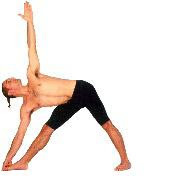
III UTTHITA TRIKONASANA • TRIANGLE POSTURE Utthita=extended Tri=three Kona=angle 1. Inhale, jump to right, right foot parallel to edge of mat, left heel turned inward, heels 3 ft apart. 2. Exhale, reach out over foot and bend to right, hold big toe of right foot with first two fingers of right hand and pull up on it, creating counter tension and oppositional stretch. Turn head to look up toward left thumb, opening chest toward ceiling. Feel the rotation of the hips as the right hip moves under and the left hip rotates open. Drishti: thumb of left hand. Hold for 5-8 breaths. 3. Inhale, come up slowly. 4. Exhale to other side, repeat 1-3. 5. Inhale, come up, keeping arms out to sides. Modified posture: right hand to ankle or shin or up as high as necessary to prevent straining back. If neck is strained, look to toes and then back up to thumb. IV PARIVRTTA TRIKONASANA • REVOLVING TRIANGLE Parivrtta=revolved Tri=three Kona=angle 1. Exhale, revolve around pullin...

The Primary Series : Standing Asanas

Image
I PADANGUSTHASANA • BIG TOE POSTURE Pada=foot or leg Padangustha=big toe Begin in Samasthiti. Jump feet hip width apart (6-8 inches), feet parallel. 1. Inhale, hands on hips, lift chest, look up and back. 2. Exhale, bend forward, hold onto big toes with middle and index fingers. 3. Inhale, head up, straighten back like a ski slope, arms straight, look up between eyebrows. 4. Exhale, move crown of head towards floor, elbows out to sides. Drishti: nose. Hold posture for 5-8 breaths. Modified posture: bend knees. 5. Inhale, head up, look between eyebrows (only your head, don’t come all the way up yet). II PADAHASTASANA • HAND UNDER FOOT POSTURE Pada=foot Hasta=hand 1. Exhale, slide hands under feet. 2. Inhale, head up, look up and extend spine, place the hands as far under the feet as possible, toes come to the wrists, the back of the wrists should be on the floor and weight off the heels. 3. Exhale, fold at waist, head towards floor. Drishti...

The primary series

There are 6 series or sequences of postures in the ashtanga yoga system. This manual focuses on the primary, or first series, which is known as yoga chikitsa (yoga therapy). It is designed to heal, detoxify, and align the body and mind, particularly the spine. The sequencing of postures is a science, set up so that each asana provides a necessary foundation for what follows. We always begin with the sun salutations and standing postures to generate heat and connect with the breath. The first half of the primary series (which begins after the standing postures) is mostly forward bends, working the hamstrings, hips, and back. The middle section focuses on flexibility and the third part combines more flexibility with strength postures. The finishing postures are the same regardless of what series you are practicing. They are restorative postures designed for cooling down, balancing out the body, and integrating the effects of the practice. This is the vinyasa system, a breathing/movin...

Surya Namaskara

Image
Practice Surya namaskara B Begin in Samasthiti, equal standing 1. Inhale, bend knees, lift arms, palms together over head, gaze at thumbs. 2. Exhale, straighten legs to a forward bend, Uttanasana, gaze at nose. 3. Inhale, head up, lengthen spine, gaze at third eye. 4. Exhale, jump back to Chaturanga Dandasana. 5. Inhale, lift chest, head back to Urdhva Mukha Svanasana, upward facing dog, gaze at sky. 6. Exhale, lift hips to downward facing dog, Adho Mukha Svanasana, gaze toward navel. 7. Inhale, right foot forward, left heel turned inward. Virabhadrasana, lift arms, palms together. Right knee bent, left leg straight with back foot pressed into floor. Gaze at thumbs. 8. Exhale, back to Chaturanga Dandasana. 9. Inhale, upward facing dog, Urdhva Mukha Svanasana 10. Exhale back to downward dog. 11. Inhale, left foot forward, right foot turned in at an angle, Virabhadrasana; lift arms above head, gaze to thumbs, left knee bent. 12. Exhale back to Chaturanga....

Sun Salutation : The Dawning of a Ritual

Image
Ritual Connects Us To The Absolute By tradition, at dawn, the yogis practiced greeting the sun with a salutation. A yoga session is incomplete without it. An ideal exercise to get you moving, Surynamaskara welcomes the new day, preparing for the asanas, heating up the body, toning up the muscles, quickening and intensifying the respiration and cardiac rhythm. The sun salutation is the foundation of your practice, it establishes the connection of movement and breath, uniting body, mind, and spirit. Not only is the sun salutation a preparation for the rest of your yoga practice, but it is a complete exercise within itself. Suryanamaskara tones up the digestive system by the alternate stretching and compression of the abdominal region. It massages the inner organs, stomach, liver, and spleen. It activates digestion and aids in reducing constipation. Synchronizing breath with movement, the lungs are thoroughly ventilated and the blood oxygenated, creating a detoxifying effect. ...

Pranayama : Your Practice

Pranayama Sequence Once you get the feel for quality of breath and the bandhas you can practice this pranayama sequence. Begin with 3 ujjayi breaths (3 full breaths with sound) I. Baya kumbhaka - exhale retention Take a deep breath in and then exhale fully. Hold the exhale. Engage mula bandha, uddiyana bandha and jalandara bandha. Begin with a 5 second hold and build from there. Repeat 3 times 3 ujjayi breaths II. Antara kumbhaka - inhale retention Take a full inhalation and hold. Engage the bandhas. Begin with 5 second hold. Repeat 3 times. 3 ujjayi breaths III. Antara kumbhaka and baya kumbhaka Inhale fully and hold 5 seconds. Exhale and hold 5 seconds. Engage all three bandhas. Repeat three times. As your abiliity to control your breathe improves, increase the seconds of the holds. Lay down and rest at the end to integrate the pranayama practice. Feel the effects on your body and mind. your practice Integration The Challenge The true challen...

The invocation

Image
Acknowledge The Creator You say a prayer. Connecting with the world of sound, you focus your attention inward. Om… (All; the universal vibration) I bow to the lotus (symbol of unfolding enlightenment) feet of the teachers Who awaken in me the pure happiness of universal being. I take refuge in the jungle physician, Who dispels the delusions of conditioned existence to reveal peace. I prostate my ego self before the wisdom of Patanjali Who is depicted as crowned by a thousand white radiant serpents (the symbol of kundalini, universal energy) And as holding in his hands a conch shell (the symbol of divine sound, AUM, and the planet’s breath in the ocean waves) As holding a discus of light (the symbol of infinite time, and the one sun which shines on all with equanimity) And as holding the sword of discrimination between illusions (of the selective attention of ego conditioned particularities) and universal t ruth. Om…

Create a Sacred Space

Image
Choose A Spot That Draws You Inward This is a time of focus. You acknowledge the space around you on which you are about to work. It should be quiet, with no interruptions. You pick a place for the feet and plant them, one by one, deliberately connecting with the earth beneath. Participation at this level is important, if the link between your body and the ground is formed there is a centered calmness. Making a time and place for your yoga is essential for maintaining a regular practice. Choose a place, which is warm and where there is enough room for you to move freely. It is helpful to practice at the same time each day, the optimal times being sunrise and sunset. Choose a spot that draws you inward. Regular practice is the key to yoga. It is through practice that these seemingly impossible postures are mastered with comfort and ease within a reasonable time period. It is through practice that yoga becomes integrated in your life. Practice Decide how much time you ...

Ashtanga Yoga : Jalandhara bandha

Jalandhara bandha Jalandhara bandha is the water pipe lock. It binds the network of subtle energy channels. Engaging Jalandhara bandha is useful for alleviating diseases of the throat. It also mproves the quantum of prana in the thoracic region. By pressing the chin to the chest, prana is captured, preventing it from escaping the upper body. Many major nerve fibers pass through the neck; when jalandhara bandha is performed it exerts pressure on them and the flow of nervous impulses to the brain is restricted. These impulses collect in the cervical plexus, and when the bandha is released they flood into the brain. The force of these impulses helps to activate higher centers in the brain, those that function with creativity and intellect. Practice Jalandhara bandha 1. Sit comfortably in siddhasana or padmasana (illustration p.13). Place the palms of the hands on the knees and allow the whole body to relax. Inhale slowly and deeply through the nose and retain the breath. Lower the chin so...