Posts

Showing posts with the label tantric yoga

The Primary Series : Sitting Postures
Image
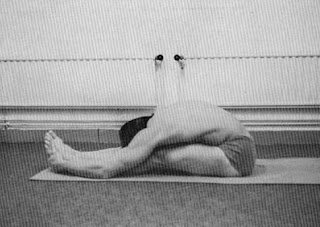
XIV PA SCHIMOTTANASANA A-C • INTENSE WEST STRETCH OR SITTING FORWARD BEND Paschima=west Uttana=intense stretch A 1. Inhale, arms up, look up to thumbs. 2. Exhale, bend forward, hold onto big toes with middle and index fingers. 3. Inhale, head up, straighten spine, lift chest and look toward 3rd eye. 4. Exhale, bend forward, pulling elbows out to sides to help bring chest to thighs, then nose to knees. (In A, B, and C pull shoulder blades back down the spine as the arms stretch forward to create oppositional pull.) Drishti: nose. Hold for 5-8 breaths. Modified posture: hands to ankles or shins, look up, spine straight. B 1. Inhale, head up, look up between eyebrows, lengthen spine, this time hold around sides of feet. 2. Exhale, bend forward, go a little deeper into the posture and bring chin to knees, elbows should be above the ground out to the side, not touching the floor, feet flexed. Drishti: nose. Hold for 5-8 breaths.. C 1. Inhale, head up, ...

The Primary Series :: Standing Asanas

Image
VIII PARSVOTTANASANA • INTENSE SIDE STRETCH POSTURE Parsva=side Uttana=intense stretch 1. Inhale, jump feet out 3 ft apart, right foot parallel to edge of mat (90 degrees) left heel turned in (left foot at a 45-60 degree angle). 2. Exhale, hands in prayer behind back, turn hips to right, lift kneecaps. 3. Inhale, look up, open chest. 4. Exhale, press palms together not clasping thumbs or fingers, stretch out and then down, bend from the hips forward over right leg, bring chin toward shin. Pull right hip back so hips are parallel, lift elbows. Drishti : 2nd toe of extended foot. Hold for 5-8 breaths. 5. Inhale, come up. 6. Exhale , turn hips to left, reverse feet. 7. Inhale, open chest, look up and back. 8. Exhale, bend forward over left leg. Hold 5-8 breaths. 9. Inhale, come up. 10. Exhale, hop to Samasthiti. Modified posture: hold elbows behind back instead of hands in prayer, stay at half way down position with head up, spine straight.

Yoga Emotional and Physical Benefits

Image
Not only does the practice of yoga have wonderful physical benefits, there are also more subtle benefits regarding the emotional and spiritual dimensions. Yoga-based relaxation techniques and stretching are effective because the mind is focused in a meditative way on the movements, skin / muscle sensations and relaxed breathing. A healthy body contributes to a healthy mind. Furthermore, a relaxed body contributes to relaxing the mind and emotions. This combination results in complete, dynamic health. Yoga provides powerful skills for stress-management - coping with the stresses or ups and downs of daily life. Accumulated emotional stress can manifest as character armor in the body, which may lead to maladaptive psychological tendencies including anxiety, depression and addictions. In Yoga this armor is called "kleshas". The postures bend, stretch and twist these "kleshas" out of the system, thus releasing emotional blockages. As the body becomes more flexible s...

Easy ways to practice yoga at home.

Image
Yoga is a spiritual practice which assists people in unifying mind, body and heart. Yoga consists of many Asanas and different yoga postures. For practicing yoga you are not necessarily required to join some sort of yoga classes, instead, you can easily practice yoga at home. Many times on account of many reasons such as lack of time, living far from yoga studios or unable to afford join yoga classes’ people prefer to practice yoga at home rather than going anywhere else. Sometimes people want to do yoga in odd hours, like late night for peace of mind and at such time home is the best place to practise it. But to do that you should know how and what to do. There is below mentioned some points which you should keep in mind when you are going to do yoga at home – • Make a specific place for meditation. It may be either a room with door or even you can part one room into two sections with the help of furniture or a screen. • Arrange for tools required for doing yoga at home like yoga mat...

Sun Salutation : The Dawning of a Ritual

Image
Ritual Connects Us To The Absolute By tradition, at dawn, the yogis practiced greeting the sun with a salutation. A yoga session is incomplete without it. An ideal exercise to get you moving, Surynamaskara welcomes the new day, preparing for the asanas, heating up the body, toning up the muscles, quickening and intensifying the respiration and cardiac rhythm. The sun salutation is the foundation of your practice, it establishes the connection of movement and breath, uniting body, mind, and spirit. Not only is the sun salutation a preparation for the rest of your yoga practice, but it is a complete exercise within itself. Suryanamaskara tones up the digestive system by the alternate stretching and compression of the abdominal region. It massages the inner organs, stomach, liver, and spleen. It activates digestion and aids in reducing constipation. Synchronizing breath with movement, the lungs are thoroughly ventilated and the blood oxygenated, creating a detoxifying effect. ...

Pranayama : Your Practice

Pranayama Sequence Once you get the feel for quality of breath and the bandhas you can practice this pranayama sequence. Begin with 3 ujjayi breaths (3 full breaths with sound) I. Baya kumbhaka - exhale retention Take a deep breath in and then exhale fully. Hold the exhale. Engage mula bandha, uddiyana bandha and jalandara bandha. Begin with a 5 second hold and build from there. Repeat 3 times 3 ujjayi breaths II. Antara kumbhaka - inhale retention Take a full inhalation and hold. Engage the bandhas. Begin with 5 second hold. Repeat 3 times. 3 ujjayi breaths III. Antara kumbhaka and baya kumbhaka Inhale fully and hold 5 seconds. Exhale and hold 5 seconds. Engage all three bandhas. Repeat three times. As your abiliity to control your breathe improves, increase the seconds of the holds. Lay down and rest at the end to integrate the pranayama practice. Feel the effects on your body and mind. your practice Integration The Challenge The true challen...

The invocation

Image
Acknowledge The Creator You say a prayer. Connecting with the world of sound, you focus your attention inward. Om… (All; the universal vibration) I bow to the lotus (symbol of unfolding enlightenment) feet of the teachers Who awaken in me the pure happiness of universal being. I take refuge in the jungle physician, Who dispels the delusions of conditioned existence to reveal peace. I prostate my ego self before the wisdom of Patanjali Who is depicted as crowned by a thousand white radiant serpents (the symbol of kundalini, universal energy) And as holding in his hands a conch shell (the symbol of divine sound, AUM, and the planet’s breath in the ocean waves) As holding a discus of light (the symbol of infinite time, and the one sun which shines on all with equanimity) And as holding the sword of discrimination between illusions (of the selective attention of ego conditioned particularities) and universal t ruth. Om…

Ashtanga Yoga : Jalandhara bandha

Jalandhara bandha Jalandhara bandha is the water pipe lock. It binds the network of subtle energy channels. Engaging Jalandhara bandha is useful for alleviating diseases of the throat. It also mproves the quantum of prana in the thoracic region. By pressing the chin to the chest, prana is captured, preventing it from escaping the upper body. Many major nerve fibers pass through the neck; when jalandhara bandha is performed it exerts pressure on them and the flow of nervous impulses to the brain is restricted. These impulses collect in the cervical plexus, and when the bandha is released they flood into the brain. The force of these impulses helps to activate higher centers in the brain, those that function with creativity and intellect. Practice Jalandhara bandha 1. Sit comfortably in siddhasana or padmasana (illustration p.13). Place the palms of the hands on the knees and allow the whole body to relax. Inhale slowly and deeply through the nose and retain the breath. Lower the chin so...

Ashtanga Yoga: The Breath of Life

Feeding The Fire In many languages the words for spirit and breath are the same. In Sanskrit it’s prana, in Latin, spiritus, and in Hebrew, ruach. In Portuguese the word for taking in breath is inspiration, or spirit-in. They believe that an infant literally breathes its spirit into its body with its first breath. We breathe in life. Breath is the source of life and vitality. It is the spirit moving in rhythm in the body. When the breath wanders, the mind is unsteady, but when the breath is still, so is the mind still. Hatha Yoga Pradipika. The Victorious Breath • Ujjayi Breathing Breath is the fuel that feeds the internal fire, gives it life, keeps the flame going. The vital life energy, prana, is controlled by the reath. In ashtanga yoga, ujjayi breathing (victorious breath) is used to enrich prana. By breathing through the nose, with the mouth closed, the breath is felt from the throat, roducing a hissing sound. This sound of the breath keeps the mind focused. As the mind begins to...

Asanas

Image
Asana is not a particular posture, but a state. Within the word asana itself are the connotations of strength and firmness, as well as the connotations of pleasantness and comfort. This is the balance we are trying to achieve, strength and flexibility, not only in the physical postures, but also in our mental state. Take The Ambition Out Of It Everybody is unique and their progression in yoga is going to look differently than the person next to them. It is important to allow the asanas to arise out of an internal place rather than some externally imposed idea of what the posture should look like. As long as you are working at your peak, combining breath, bandhas, and movement, and you are gaining that internal sense of stretching and strengthening, you are exactly where you needto be. In the beginning, the physical aspects of the postures will affect you the most. In time, and as you progress, you will become more aware of the flow of prana, life force, moving through your ...

Prana

Image
The Chakras From bottom to top the 7 chakras: 1. Muladhara chakra - at the anus 2. Svadhishthana chakra - at the genitals 3. Manipura chakra - at the navel 4. Anahata chakra - at the heart 5. Vishuddha chakra - at the throat 6. Ajna chakra- between and behind the eyebrows 7. Sahasrara chakra - at the crown of the head Prana is a subtle form of energy. Prana literally means “breathing forth” the universal life force. Through practicing asana and pranayama, prana is brought into and stored in the body, increasing vitality. Prana mainly flows through the body in the nadis, or nerve channels of the astral body. Prana exists as a negative energy as well as a positive energy. Prana moves upward and apana moves downward. When the two unite at the muladara chakra (base of spine) kundalini (dormant cosmic energy) is awakened. The most important nadi, or energy channel, (there are 72,000!) is the shushumna nadi which correlates to the spinal cord in the physical body. When kundalini is awakened ...

The History of Ashtanga Yoga

Image
Twenty years ago Ashtanga yoga was very much a fringe activity. Our small, dedicated group of students in Encinitas, California were mostly young, hippie typeswith little money and few material possessions. We did have one precious thing – Ashtanga practice, which we all knew was very powerful and deeply transformative. Practicing together created a unique and magical bond, a real sense of family. Over the years the Ashtanga family has grown considerably throughout the world and I’ve had the opportunity to share the practice with many wonderful people as both a student and teacher. In Austin, Texas I met Larry Schultz 15 years ago when he was just beginning his Ashtanga practice with my teacher, Pattabhi Jois. Even though the practice was very challenging for him, Larry approached it with great enthusiasm, optimism, and gratitude. He, like so many others, recognized immediately that this was exactly what he had been looking for and was very excited by both the practice and the people i...

Practising Ashtanga Yoga

Image
Yoga is a philosophy of the life, which has also the eventual to create a healthy body and vibrantly spirit. The yoga of Ashtanga vinyasa is a method of the yoga which has it's origins in a known ancient document under the name of korunta yoga. Ashtanga refer specifically to eight the practical spiritual ones described by wise Patanjali in Sutra yoga. It is advisable to note that the experts of the majority of the modern externats of yoga of hatha, including pattabi jois, draw from yoga sutras de patanjali and thus practise the yoga of ashtanga. Means of yoga of Ashtanga exactly "eight-limbed yoga," as described by wise patanjali in sutras yoga. The yoga of Ashtanga aims at purifying the body by the eight members or stages of yoga. It starts outside with yama which is the order and niyana which is the codes of conduct. They are manners that we trade and with what we can act one on the other with whole reality and ourselves at the same time. These stages cannot be practise...

Yoga - Weight Loss

Image
Renowned for its capacity to reduce stress, enhance flexibility and improve muscle tone and strength, yoga is not so well known for its contributions to weight loss. Most people don't think of yoga as a way to burn off the calories, so it can be surprising to discover that it can be an effective way to boost your weight loss efforts. Conventional yoga isn't a vigorous type of exercise. While it conditions and tones your muscles, you're not likely to work up a sweat during a yoga session. However, the fact that your muscles are being given a workout means your body is utilizing calories more effectively. So, cardiovascular exercise will yield better results if you also practice yoga regularly. An important component of yoga is discipline of mind and body, which will help you stay committed to your exercise program and healthy eating habits. Yoga reinforces the link between your body and your mind, increasing your desire to look after your body. This is very helpful for peopl...

Yoga Sutra

Image
The Classical Period is marked by another creation - the Yoga Sutra. Written by Patanjali around the second century, it was an attempt to define and standardize Classical Yoga. It is composed of 195 aphorisms or sutras (from the Sanskrit word which means thread) that expound upon the Raja Yoga and its underlying principle, Patanjali's Eightfold path of Yoga (also called Eight Limbs of Classical Yoga). These are: Yama, which means social restraints or ethical values; Niyama, which is personal observance of purity, tolerance, and study; Asanas or physical exercises; Pranayama, which means breath control or regulation; Pratyahara or sense withdrawal in preparation for Meditation; Dharana, which is about concentration; Dhyana, which means Meditation; and Samadhi, which means ecstasy. Patanjali believed that each individual is a composite of matter (prakriti) and spirit (pur usha). He further believed that the two must be separated in order to cleanse t...

History of Yoga

Image
Today, many people are taking up yoga techniques for physical exercise, and most don’t know the history of yoga. They believe there is nothing wrong with implementing this form of exercise into their daily regiment to promote a more healthy body. However, the practice of yoga is much more than a system of physical exercise for health. Yoga is an ancient path to spiritual growth, and originates out of India where Induism is practiced. The practice and goal of yoga dates back to the Upanishads, written between 1000-5000 BC. History of Yoga – Is it spiritual? The history of yoga is based in the Indus Valley civilization. The techniques are practiced by the Indus to initiate spiritual growth. The yogis encourage union with the finite jiva (transitory self) and with the infinite Brahman (eternal self). Brahman is a term used by the Hindus to mean “God.” So, what are we supposed to unite with? Yogis usually think of God as an impersonal, spiritual substance, coexisting with all of reality....

Yoga Positions

Image
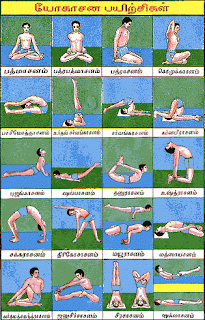
Dhanurasana Ado Mukha Shavasana Bhujangasana Dhanurasana Paschimottanasana Uttanasana

Indian Yoga Gurus

Image
India is a land where Yoga is practiced from ancient time. In old days sages and saints taught the methodology of yoga. In modern life many gurus and yoga teacher has help in the resurgence of ancient Yoga Practice for the well being of human society. The Yoga gurus not only worked in the mainland of India but also worked abroad to introduce the glory of Yoga practice to the people of West. The most renowned Yoga Gurus of India are : B.K.S. Iyenger : B.K.S. Iyenger came from a poor family in South India and learnt Yoga from T. Krishnamacharya. He started his life with a great struggle but gradually became one of the most famous Yoga Gurus In India. He was the author of many books and founded `Ramamani Iyenger Memorial Yoga Institute to pay tribute to his late wife. Bikram Choudhury: He is probably the most popular name among the Yoga Gurus in the western world. His method of teaching is known as Bikram Yoga, which is the combination of Hatha Yoga. The Bikram Yoga is taught in mo...

Yoga Mother Mrs. Daya Vyas

Image
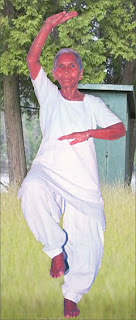
Mrs. Daya Vyas started to learn 'Yoga' since the age of seven from the original saints, including SIVANANDA SWAMI. She has been practicing and spreading this original unadulterated, pure Yoga throughout the world. YOGA-MOTHER (Mrs. Daya Vyas) a professor of Economics Master of Gandhian Economics in an eminent University, for whom 'Yoga' was a passion, was a very passionate Yoga Guru whose only desire was to spread true, pure Yoga throughout the world. She was a follower of Gandhi and had met the legendary master at the age of 13 at his Wardha Ashram. Since meeting him, she wore 'Khadi' a Gandhian cloth (hand spun) and propagated the Gandhian philosophy of Sarvodaya (rise of all) throughout her life . She rigorously trained her son, Atul , and daughter, Dr. Shubha Vyas , in the discipline of original 'Yoga' as well as a number of celebrities and many people from all across the globe. The Vyas yoga family believes in treating everyone as equal...

Yoga Positions

Image
It would be impossible to delineate all recognized postures and their variations. Here are some common Yoga postures, or asanas. Sukkasana (Half Lotus) Shavasana (Corpse Pose) Shirshasana (Head Stand) Halasana (Plow) Sarvangasana (Shoulder Stand)