Posts

Showing posts with the label hatha yoga

The Primary Series :: Standing Asanas

Image
X ARDHA BADDHA PADMOTTANASANA • HALF BOUND LOTUS FORWARD BEND Ardha=half Baddha=bound Padma=lotus Uttana=intense stretch 1. Inhale, place the right heel as close to the navel as possible. 2. Exhale, reach around behind back with right hand and hold onto big toe of right foot. 3. Inhale, lift left arm up. 4. Exhale, bend forward, looking straight ahead, left hand on floor. Drishti: nose. Hold for 5-8 breaths. 5. Inha le, head up, look between eyebrows. 6. Ex hale, fold forward, crown of head towards floor. 7. Inhale, head up, look up. 8. Exhale, spine straight. 9. Inhale, come up. 10. Exhale , leg down to Samastithi. Repeat left side,1-10. Modified posture: hold foot up in half lotus with both hands, 5-8 breaths, don ’ t bend forward. Or bend forward with both hands to the floor, and knee bent .

The Primary Series :: Standing Asanas

Image
VIII PARSVOTTANASANA • INTENSE SIDE STRETCH POSTURE Parsva=side Uttana=intense stretch 1. Inhale, jump feet out 3 ft apart, right foot parallel to edge of mat (90 degrees) left heel turned in (left foot at a 45-60 degree angle). 2. Exhale, hands in prayer behind back, turn hips to right, lift kneecaps. 3. Inhale, look up, open chest. 4. Exhale, press palms together not clasping thumbs or fingers, stretch out and then down, bend from the hips forward over right leg, bring chin toward shin. Pull right hip back so hips are parallel, lift elbows. Drishti : 2nd toe of extended foot. Hold for 5-8 breaths. 5. Inhale, come up. 6. Exhale , turn hips to left, reverse feet. 7. Inhale, open chest, look up and back. 8. Exhale, bend forward over left leg. Hold 5-8 breaths. 9. Inhale, come up. 10. Exhale, hop to Samasthiti. Modified posture: hold elbows behind back instead of hands in prayer, stay at half way down position with head up, spine straight.

Chakra Meditation

Image
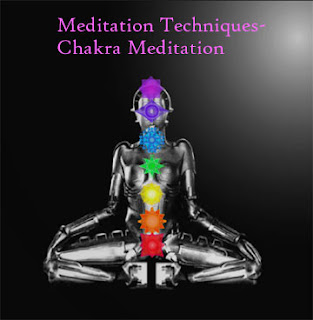
T he human body has some sensitive areas known as the centers or the charkas that are responsible for emotions, intuition. They are located in seven important parts of our body. Chakra meditation can focus on one or more chakras. It helps us to get more awareness and consciousness in life. Most of us believe that chakras reflect the life force energy. However, there are chances for charkas to be out of balance. Chakra meditation facilitates rebalancing the energy fields. To start chakra meditation, you can seek out any position you find comfortable. Then relax yourself by taking deep breath and allow your eyes to close slowly. There are two types of approaches in Chakra meditation. You can either imagine your energy being balanced in the chakra spots in your body, or you can see the colors linked with such spots. Hint: many people feel the color approach is easier to practice. Various Types of Chakra in The Human Body • Root Chakra: It is worth to start with your root ch...

The Primary Series : Standing Asanas

Image
VII PRASARITA PADOTTANASANA A-D • INTENSE WIDE LEG STRETCH Prasarita=spread out Pada=foot Uttana=intense stretch A 1. Inhale, jump to the right, feet approximately 4 ½ ft apart, legs out to side, feet parallel, hands on hip joint. Look up and back open chest, tuck pelvis. 2. Exhale, fold forward, lengthening as you bend at waist, place both hands on floor between feet shoulder width apart. Pull the scapula up the back and away from the shoulders, elbows out to sides. 3. Inhale, head up, look up between eyebrows, spine straight. 4. Exhale, crown of head towards the floor. Drishti: nose. Hold for 5-8 breaths. 5. Inhale, head up, look up between eyebrows. 6. Exhale, hands to hip joint. 7. Inhale, come up, spine straight. 8. Exhale. Modified posture: bend knees. B 1. Inhale, arms out to the sides. 2. Exhale, hands on h ip joint, fingers pushing into abdominal cavity to emphasize uddiyana bandha, pull the elbows together and lift from the hips, top of h...

Yoga Emotional and Physical Benefits

Image
Not only does the practice of yoga have wonderful physical benefits, there are also more subtle benefits regarding the emotional and spiritual dimensions. Yoga-based relaxation techniques and stretching are effective because the mind is focused in a meditative way on the movements, skin / muscle sensations and relaxed breathing. A healthy body contributes to a healthy mind. Furthermore, a relaxed body contributes to relaxing the mind and emotions. This combination results in complete, dynamic health. Yoga provides powerful skills for stress-management - coping with the stresses or ups and downs of daily life. Accumulated emotional stress can manifest as character armor in the body, which may lead to maladaptive psychological tendencies including anxiety, depression and addictions. In Yoga this armor is called "kleshas". The postures bend, stretch and twist these "kleshas" out of the system, thus releasing emotional blockages. As the body becomes more flexible s...

Easy ways to practice yoga at home.

Image
Yoga is a spiritual practice which assists people in unifying mind, body and heart. Yoga consists of many Asanas and different yoga postures. For practicing yoga you are not necessarily required to join some sort of yoga classes, instead, you can easily practice yoga at home. Many times on account of many reasons such as lack of time, living far from yoga studios or unable to afford join yoga classes’ people prefer to practice yoga at home rather than going anywhere else. Sometimes people want to do yoga in odd hours, like late night for peace of mind and at such time home is the best place to practise it. But to do that you should know how and what to do. There is below mentioned some points which you should keep in mind when you are going to do yoga at home – • Make a specific place for meditation. It may be either a room with door or even you can part one room into two sections with the help of furniture or a screen. • Arrange for tools required for doing yoga at home like yoga mat...

Sun Salutation : The Dawning of a Ritual

Image
Ritual Connects Us To The Absolute By tradition, at dawn, the yogis practiced greeting the sun with a salutation. A yoga session is incomplete without it. An ideal exercise to get you moving, Surynamaskara welcomes the new day, preparing for the asanas, heating up the body, toning up the muscles, quickening and intensifying the respiration and cardiac rhythm. The sun salutation is the foundation of your practice, it establishes the connection of movement and breath, uniting body, mind, and spirit. Not only is the sun salutation a preparation for the rest of your yoga practice, but it is a complete exercise within itself. Suryanamaskara tones up the digestive system by the alternate stretching and compression of the abdominal region. It massages the inner organs, stomach, liver, and spleen. It activates digestion and aids in reducing constipation. Synchronizing breath with movement, the lungs are thoroughly ventilated and the blood oxygenated, creating a detoxifying effect. ...

Pranayama : Your Practice

Pranayama Sequence Once you get the feel for quality of breath and the bandhas you can practice this pranayama sequence. Begin with 3 ujjayi breaths (3 full breaths with sound) I. Baya kumbhaka - exhale retention Take a deep breath in and then exhale fully. Hold the exhale. Engage mula bandha, uddiyana bandha and jalandara bandha. Begin with a 5 second hold and build from there. Repeat 3 times 3 ujjayi breaths II. Antara kumbhaka - inhale retention Take a full inhalation and hold. Engage the bandhas. Begin with 5 second hold. Repeat 3 times. 3 ujjayi breaths III. Antara kumbhaka and baya kumbhaka Inhale fully and hold 5 seconds. Exhale and hold 5 seconds. Engage all three bandhas. Repeat three times. As your abiliity to control your breathe improves, increase the seconds of the holds. Lay down and rest at the end to integrate the pranayama practice. Feel the effects on your body and mind. your practice Integration The Challenge The true challen...

Pranayama : The Serpent Power

Image
Pranayama : The Serpent Power Live As You Breathe; Take In and Let Go Swami Rama used to say a person has one thought on inhalation and another on exhalation, so that the rate of breath determines the number of thoughts a person has. Greater number of thoughts (a faster breathing rate) decreases concentration because there are so many thoughts going on. The breath, body and mind are so closely linked, a change in one brings about a change in the other two. By developing control of your breath in certain ways, you can bring beneficial changes to your body and mind. Pranayama acts as a key, it opens the mind, freeing the nervous system of its ordinary patterns and habits. By breathing from the upper third of the respiratory system, pranayama can move blocked pathways to the brain and the nervous system, creating new patterns, roadways to the superhighway of the superconscious. Pranayama revitalizes the body, steadies the emotions, and creates great clarity of mind. ...

The invocation

Image
Acknowledge The Creator You say a prayer. Connecting with the world of sound, you focus your attention inward. Om… (All; the universal vibration) I bow to the lotus (symbol of unfolding enlightenment) feet of the teachers Who awaken in me the pure happiness of universal being. I take refuge in the jungle physician, Who dispels the delusions of conditioned existence to reveal peace. I prostate my ego self before the wisdom of Patanjali Who is depicted as crowned by a thousand white radiant serpents (the symbol of kundalini, universal energy) And as holding in his hands a conch shell (the symbol of divine sound, AUM, and the planet’s breath in the ocean waves) As holding a discus of light (the symbol of infinite time, and the one sun which shines on all with equanimity) And as holding the sword of discrimination between illusions (of the selective attention of ego conditioned particularities) and universal t ruth. Om…

Create a Sacred Space

Image
Choose A Spot That Draws You Inward This is a time of focus. You acknowledge the space around you on which you are about to work. It should be quiet, with no interruptions. You pick a place for the feet and plant them, one by one, deliberately connecting with the earth beneath. Participation at this level is important, if the link between your body and the ground is formed there is a centered calmness. Making a time and place for your yoga is essential for maintaining a regular practice. Choose a place, which is warm and where there is enough room for you to move freely. It is helpful to practice at the same time each day, the optimal times being sunrise and sunset. Choose a spot that draws you inward. Regular practice is the key to yoga. It is through practice that these seemingly impossible postures are mastered with comfort and ease within a reasonable time period. It is through practice that yoga becomes integrated in your life. Practice Decide how much time you ...

Ashtanga Yoga: Capturing Prana II

Image
Contemplating your navel The solar plexus is located just back of the pit of the stomach on either side of the spinal column. The name “solar” is well bestowed upon this major nerve plexus, as it radiates energy to all parts of the body. According to the yogic texts it is the great storehouse of prana, the manipura chakra. Other Eastern cultures link it to the hara, dan tien, center of chi or ki. It’s the center of our being from the umbilical cord to adulthood. It‘s the place where you get that gut feeling, the intuitive sense. We’ve got to keep it healthy, tuned in and alive. Uddiyana Bandha • The Flying Bandha Practice Uddiyana bandha 1. Stand with feet about two feet apart. Bend the knees slightly and rest the hands above the knees, with the thumbs facing inwards and the fingers outwards. The spine must emain straight, not curved; the head should be kept up and eyes open. Inhale deeply through the nose, then exhale quickly through slightly pursed lips, bu...

Ashtanga Yoga: Capturing Prana

Image
Capturing Prana The Serpent Power When kundalini shakti is awakened and arises from her sleep, she is the vehicle for the expansion of consciousness, enabling the individual to fully develop his innate potential and rise beyond the mundane realm of birth and death to the level of divinity. Chela Buddhananda. Raising Mula Bandha Mula bandha is the force or energy created by lifting the pelvic floor and controlling the breath. It is the root lock and calls the fire within that causes everything to come alive, to move. Mula bandha increases flexibility and stimulates heat. By contracting the perineum and drawing the energy up from the base of the spine, one can intensify and direct the life energy, cultivating a sense of heightened awareness and increasing vitality. Mula bandha ignites the flame of kundalini (cosmic energy), the serpent power. By bringing awareness to the core of the body, mula bandha helps prevent injury. It guides you to move from your center, g...

Ashtanga Yoga: The Breath of Life

Feeding The Fire In many languages the words for spirit and breath are the same. In Sanskrit it’s prana, in Latin, spiritus, and in Hebrew, ruach. In Portuguese the word for taking in breath is inspiration, or spirit-in. They believe that an infant literally breathes its spirit into its body with its first breath. We breathe in life. Breath is the source of life and vitality. It is the spirit moving in rhythm in the body. When the breath wanders, the mind is unsteady, but when the breath is still, so is the mind still. Hatha Yoga Pradipika. The Victorious Breath • Ujjayi Breathing Breath is the fuel that feeds the internal fire, gives it life, keeps the flame going. The vital life energy, prana, is controlled by the reath. In ashtanga yoga, ujjayi breathing (victorious breath) is used to enrich prana. By breathing through the nose, with the mouth closed, the breath is felt from the throat, roducing a hissing sound. This sound of the breath keeps the mind focused. As the mind begins to...

Jala Neti • Nasal Cleansing

Image
Jala Neti • Nasal Cleansing Most colds and viruses are breathed in through the nose. From there they work their way through our system to the throat, chest, and into the entire respiratory system. One of the most effective ways of stopping that cycle is to clean out the nasal passages. A neti pot and some lightly salted water can do the job quite thoroughly. Nasal cleansing exerts a profound physiological effect on the body and mind. On the physical level, irrigation of the nasal mucosaremoves accumulated mucus from the nostrils, associated passages and sinuses, allowing air to flow without obstruction. Regular practice of neti maintains healthy secretory drainage mechanisms of the entire ear, nose and throat area. This helps to ward off colds and coughs, hay fever, and tonsillitis. It builds up resistance to various diseases of the ears, eyes, and throat. Practicing neti promotes a balance between the right and left nostrils and consequently the right and left hemispheres of the bra...

Cleansing and Purification:: Meltdown

Image
Nauli kriyas If you look around you, you’ll notice what happens as we get older. The middle of the body begins to lose shape and collapse. Gravity is pulling us downward. Unless we are practicing some type of opposing technique, the whole solar plexus area, a major nerve center of the body, will become squashed. Not to mention the toxins that get trapped, the poor digestion that results, and thelack of oxygen to the abdominal region. Naulis, in conjunction with the bandhas, bring everything upward, inviting vitality back into the middle of the body. These techniques keep the gastro-intestinal or alimentary system balanced and functioning smoothly. Naulis massage the internal organs, acting as an internal cleansing technique. Keeping you pure and clean, naulis remove sluggishness of the stomach, intestines, and liver, bringing back upward the evercaving-in abdominal region which is crushing and suffocating internal organs as gravity pulls us down.Don’t let the fire go out. Keep the chan...

Drishti (Eye Play)

Image
Eye Play The gaze is a focusing technique. By directing the gaze at specific points (the space just beyond the tip of the nose, betweenthe eyebrows) the focus is directed inward. This brings moreconcentration and awareness into the movement. Keep the gazesoft. Practice Drishti 1. Pay attention to your wandering eyes. What distracts you? 2. Try to control the urge to look toward something moving in the distance. 3. Gaze at the space just beyond the tip of your nose for one minute. 4. Does sound distract your eye gaze? Smell? Notice how your senses direct your focus. 5. At different times during the day focus your gaze at specific points (the space just beyond the tip of your nose, navel, a spot on the wall) and see what it takes to make you look away. The nine looking places are called nava drishtis 1. Nasagrai - the space just beyond the tip of the nose. This is used most often and is the primary drishti in the sitting postures. 2. Ajña chakra - th...